GenMorphics AI
Full-lifecycle enterprise workforce management platform for GenMorphics AI Solutions. A single system of record replacing spreadsheets — covering domain-expert onboarding, skill-based task routing, a custom-built NDA lifecycle engine, database-driven access control, and automated payroll for a global contractor base.
- Client
- GenMorphics AI Solutions
- Role
- Full-Stack Web Developer & Platform Architect
- Timeline
- 2025 – Present
- Stack
- 8 technologies
A closer look
- Database-driven RBAC: roles and their permission sets (resource.action.scope) live in the database as JSON, not hardcoded enums — new roles ship without a deploy
- Custom NDA lifecycle engine: a TipTap-based legal document editor with a purpose-built variable-interpolation node, versioned templates, cryptographic document hashing, and bulk admin actions (void, expire, counter-sign, revert, extend)
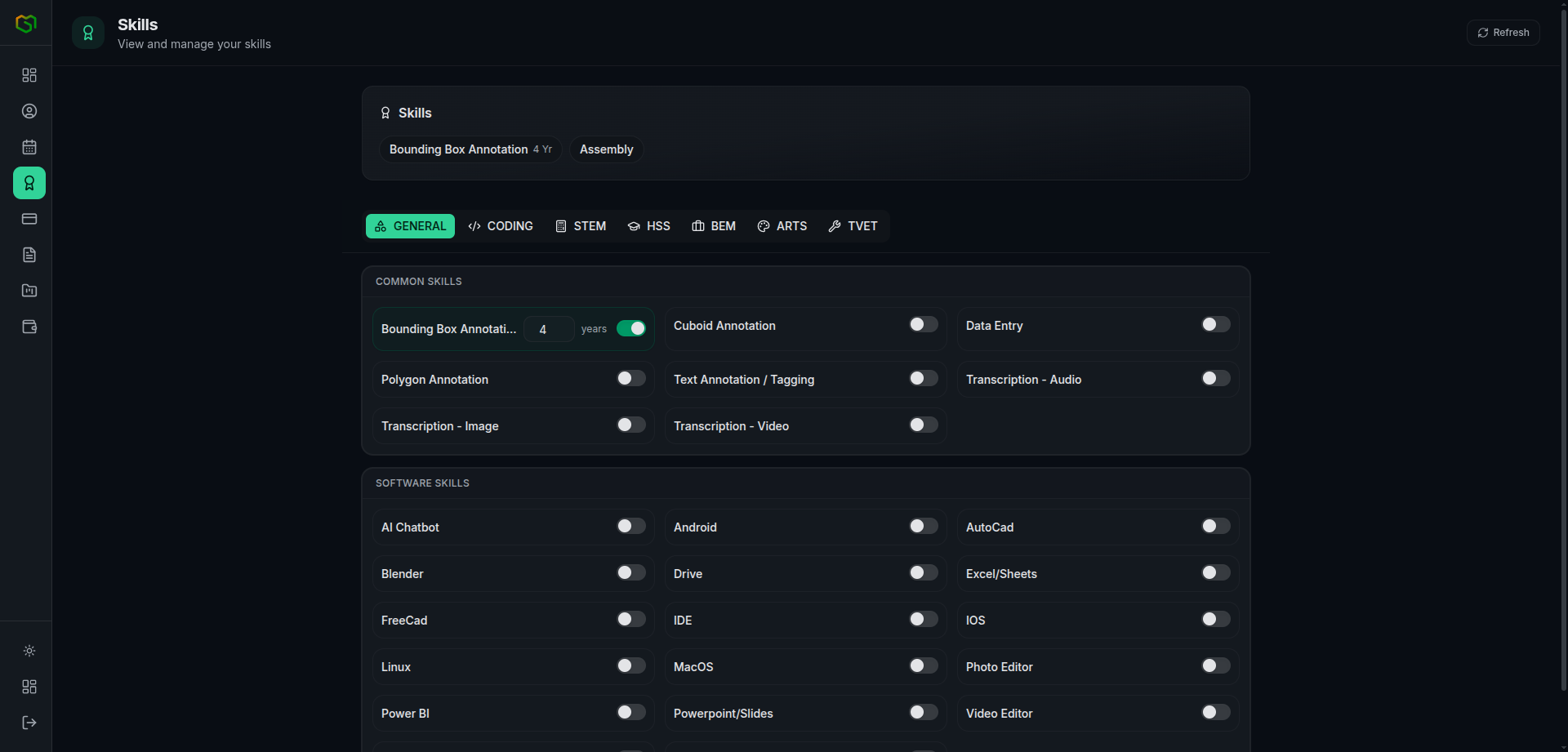
- Skill taxonomy driving task routing: a categorized skill matrix (language-specific software engineering tracks, math sub-disciplines, legal, scientific writing) scopes which specialists are eligible for which task batches
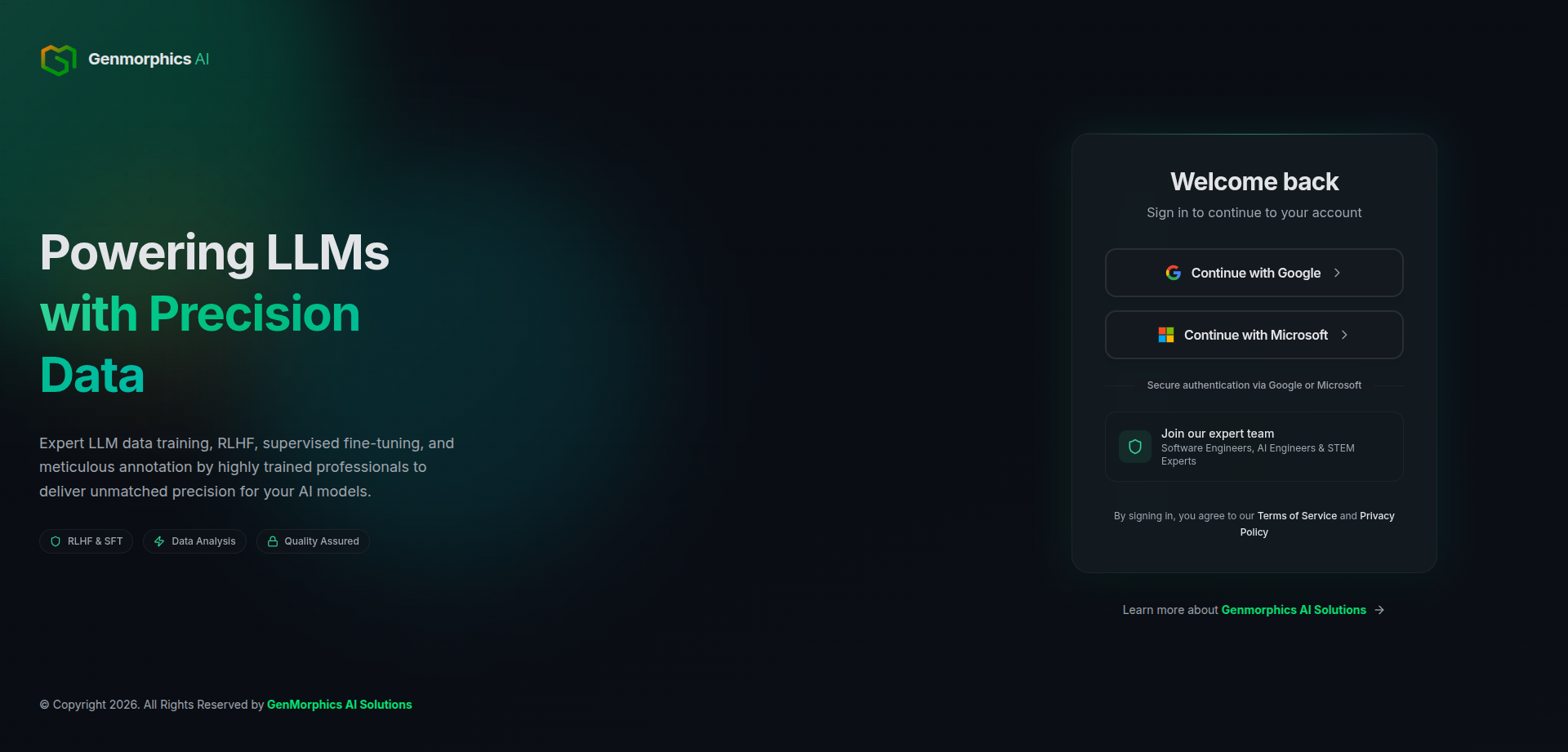
- Enterprise SSO via NextAuth.js integrating Microsoft Azure AD (Entra ID) and Google OAuth, with verified-email account auto-linking across providers
- Bulk workforce operations spanning batch task assignment and batch admin actions across the contractor lifecycle
- Automated payroll engine computing per-assignment earnings from logged hours (hourly vs. salaried roles) plus bonuses
Need a similar delivery process for your product? I can help shape the scope and ship the implementation end to end.
Start a projectFrontier AI labs need high-precision human reasoning data from vetted domain experts — lawyers, mathematicians, software engineers, scientists. GenMorphics was coordinating all of this manually: spreadsheets for task and contractor tracking, no system-enforced compliance step before someone got access to a client's proprietary task data, and payroll reconciled by hand across a global contractor base.
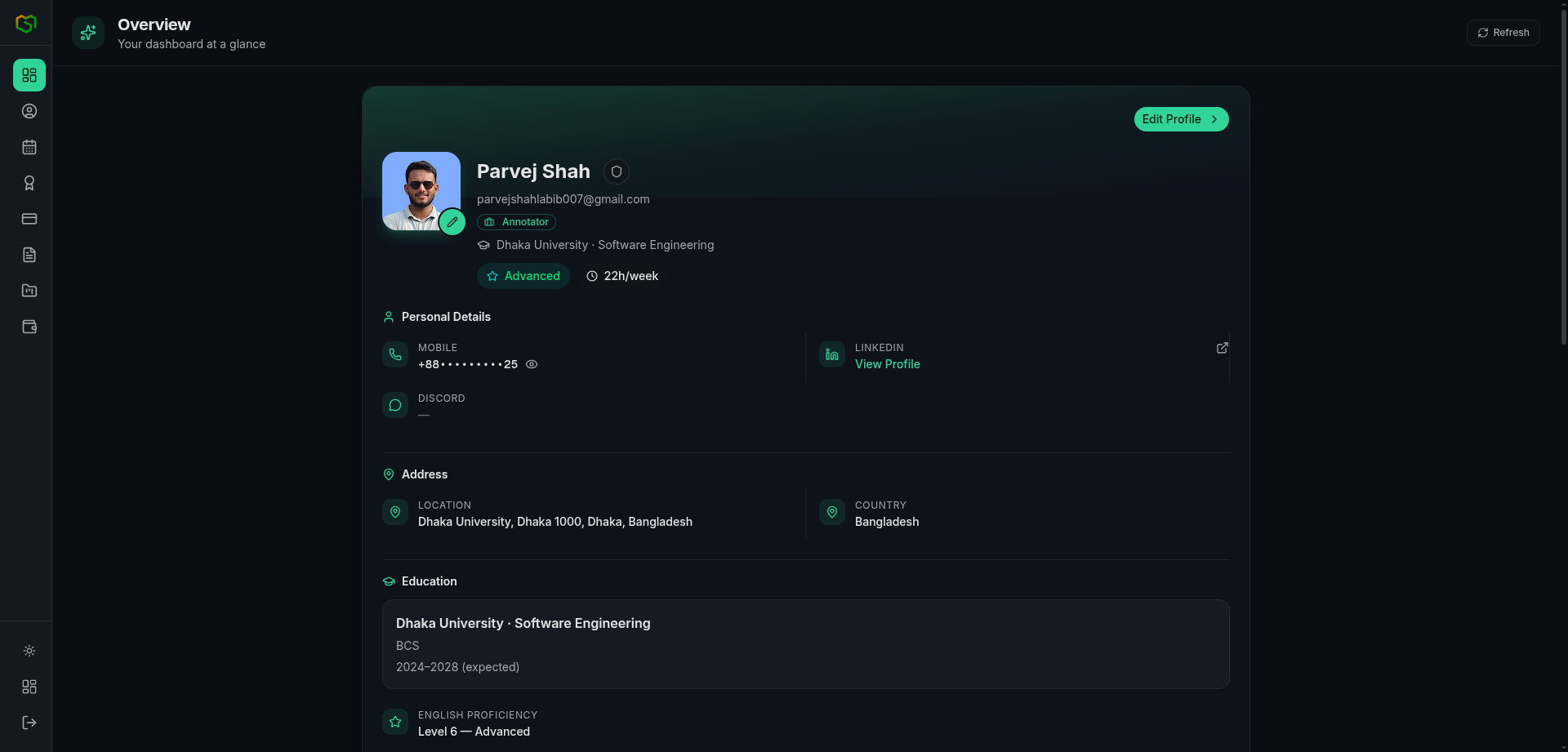
We built a single system of record spanning the entire contractor lifecycle. Specialists build categorized skill profiles that scope which task batches they're eligible for. Before any client asset is unlocked, a mandatory NDA has to be executed through a purpose-built e-signature engine — not a third-party service, but a TipTap-based editor that lets admins template legal documents with recipient-specific variables.
Access control isn't hardcoded into the app's role checks — permissions are rows in the database, so the org's structure can change without a code change. Payroll rules were built to match how GenMorphics actually pays people: hourly for operational work, salaried with hourly fallback for managerial roles.
GenMorphics AI operates as the operating system for its entire contractor workforce. Enterprise clients get task batches worked by specialists who've cleared skill and NDA gates for that specific engagement. Admins manage roles and permissions as data, review and bulk-action NDA instances at scale, and run payroll from the same platform that tracks the work.
GenMorphics moved from ad hoc spreadsheets and manual paperwork to one platform governing the full contractor lifecycle — skill-scoped task routing, a system-enforced NDA gate instead of a trust-based process, role and permission changes that ship as data instead of deploys, and payroll generated from the same records as the work itself.